A+ required
A complete, distinctive experience with convincing art, reliable interactions and tested delivery.
A small home by the woods. A cup in your hand. Plants that need a little care. This is the next ambition—and the evidence it must earn.
Open the first workroom milestone Unfinished. Neither quality target has passed. Earlier attempts are preserved.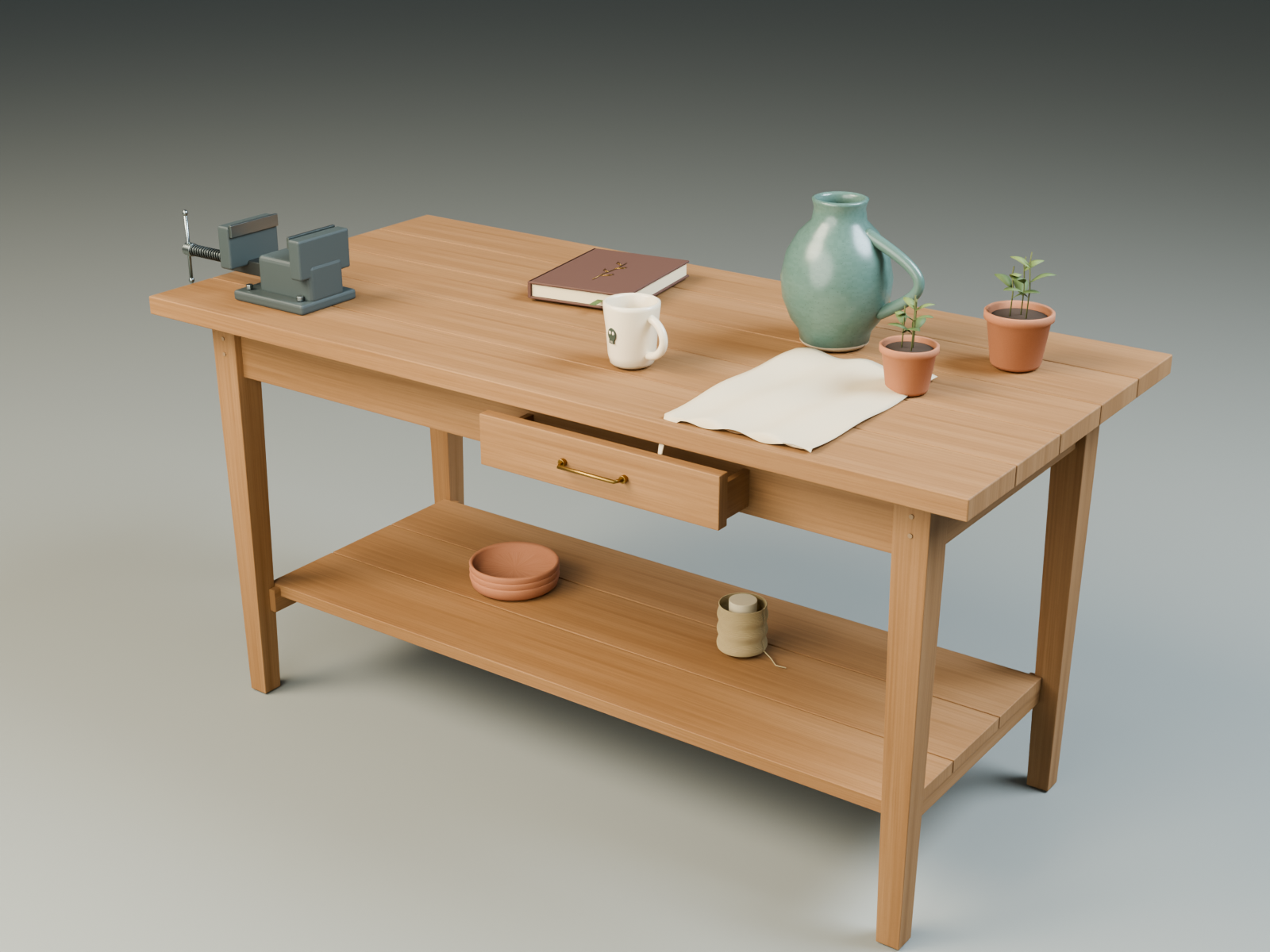
Phone instructions describe the implemented touch layout. Real iPhone 11 and headset checks are pending. This milestone does not yet have a VR mode.
A beautiful picture is only the beginning. A cup needs weight. A page should turn where you touch it. You should be able to look around while sitting, and a window should remain repaired when you return.
The scores will follow those experiences. They will not improve because the work took longer, used a bigger model, or looks impressive in one carefully chosen view.
A complete, distinctive experience with convincing art, reliable interactions and tested delivery.
A tougher standard for close detail, embodiment, consistency and smooth performance.
Both scores need all mandatory tests to pass. These are custom quality standards for this small experience, not an industry certificate or a claim to equal an entire blockbuster. The different weights mean the two totals are separate scales.
Higher resolution alone earns nothing. Missing or untested work cannot receive passing credit.
Construction, surfaces, light and a home that feels occupied.
A believable, customizable character whose body and reflection move correctly.
Carry, place and throw objects. Turn actual pages. Pull and drape cloth.
Responsive water, a useful garden, and one clock governing the changing world.
Impact-driven fragments, reliable repairs and saved changes.
Desktop, phone and headset controls that a new visitor can learn.
Measured smoothness, loading and stability on the promised devices.
Traceable source assets, a working public link and independent testing.
Every declared feature must pass repeatable checks, at its delivered visual quality, on the actual devices. An independent reviewer must verify the evidence, and a real beginner must complete the first-visit activities without coaching. No unresolved critical failure, missing feature or untested device can be concealed by averaging.
The complete register has 25 acceptance tests. It covers repeated grabbing and page turns, break-and-repair cycles, a garden loop, appearance combinations, mirror parallax, time changes, long play sessions, loading and save recovery.
Read the full registered rubric →Inspect the evidence register →Four had their full release after 2020. Each gives us a specific quality to examine; none supplies our assets.
A recognizable person and a place you can explore.
Official referenceAppearance choices and repairs must change the actual world.
Official referenceVisible, stable variation in faces, bodies and appearance.
Official referenceIts later apartment and mirror features inform the comparison.
Official referenceClose detail and convincing adult appearance, including age.
Official referenceReach, hold, release and throw with the hardware actually in use.
Official referenceWhat you see at the surface must match how objects behave.
Official referenceLayered habitat and coherent behaviour make a small place feel alive.
Official referenceDamage changes geometry and collision, not just an effect.
Official referenceSow, water, grow and harvest—with clear consequences and saved progress.
Official referenceVegetation, water and character materials hold up during movement.
Official referenceDates refer to full releases. Baldur’s Gate 3 and Teardown had earlier Early Access versions. The comparisons are a research plan, not a claim that we played or measured those games in this session.
They are future visual references outside the released-game benchmark set. Their promotional material cannot prove retail performance or comprehensive interaction. The source register records their status as checked on 4 September 2026 and must be refreshed before a later comparison.
Read the game research and source notes →Ordinary touch play comes first: move with one thumb and look with the other. Real phone testing must establish clarity, speed and comfort.
A separate stereo mode is planned. Its optics, button and motion handling need checking in your actual viewer. It is not being described as a tracked-hand headset.
Head and controller tracking require suitable hardware and separate WebXR tests. The phone-viewer result cannot stand in for those tests.
The finished character, richer world, cloth and page handling, complete farming and repair loops, device checks and public handoff still have to earn their evidence. The first workroom is a development milestone.
36 seconds · subtitles only · normal-speed browser excerpts, followed by explicitly labelled Blender inspection stills. This shows development progress, not a finished-game or device-performance claim.
Save the progress video →Explore the current milestone →AA: 14.4 / 100Target: 97, with every mandatory test passed.
AAA: 12.1 / 100Target: 90, with every mandatory test passed.
No passing grade. Of the 25 acceptance tests, 17 fail because required features are missing or incomplete; 8 remain untested. Narrow working demonstrations earn partial credit, while missing work stays in the total.
The biggest gaps are the character and mirror embodiment, direct cloth and pages, a playable garden, ceramic breakage, VR and real-device verification. This is a source-and-evidence review using the builder’s observations, not a blind playtest. The decimals come from the scoring arithmetic, not precise measurement of quality.
These scores use a much larger, tougher contract than the earlier room grades. They cannot be compared directly with the original Astra room’s 89.
Read every score and its evidence →Later additions could include a music room, a production studio and an experimental workshop. The aim is equipment you can use: record a melody, save a project, edit a scene or test a mechanism.
Yes, there are practical routes to investigate. Our own useful web apps could appear on a desk screen. A small Linux computer could use browser emulation. A modern Android phone could be streamed from a separate computer. Those are different systems, with different costs and limits.
No emulator has been installed or connected yet. Typing must not accidentally move your character, and a tiny screen needs a readable enlarged view. The iPhone and headset tests still apply.
Read the emulator options and test plan →Original designs, working instruments and useful tools come first. These are future additions, not features already present in the cottage.
Read the proposed studio systems →Other games already use “Slice of Life”. A preliminary search did not find an exact game-title match for “Alder & Water”, so it remains our working name. That search is not trademark or legal clearance.
Read the name search →